The language available to Deaf young people can be a barrier when it comes to discussing ideas connected to climate change.
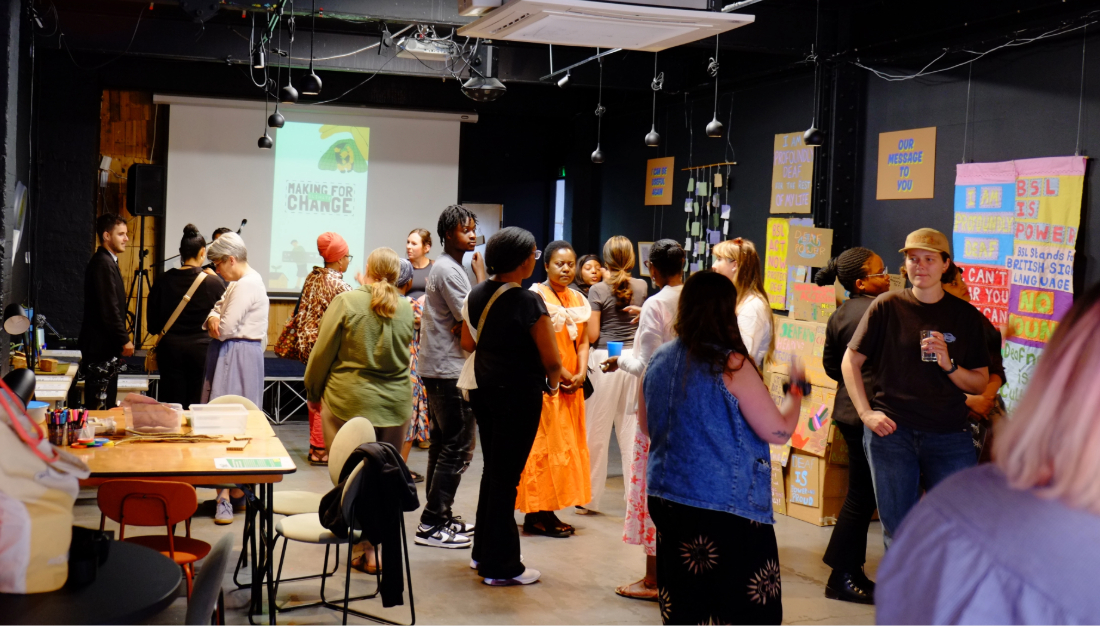
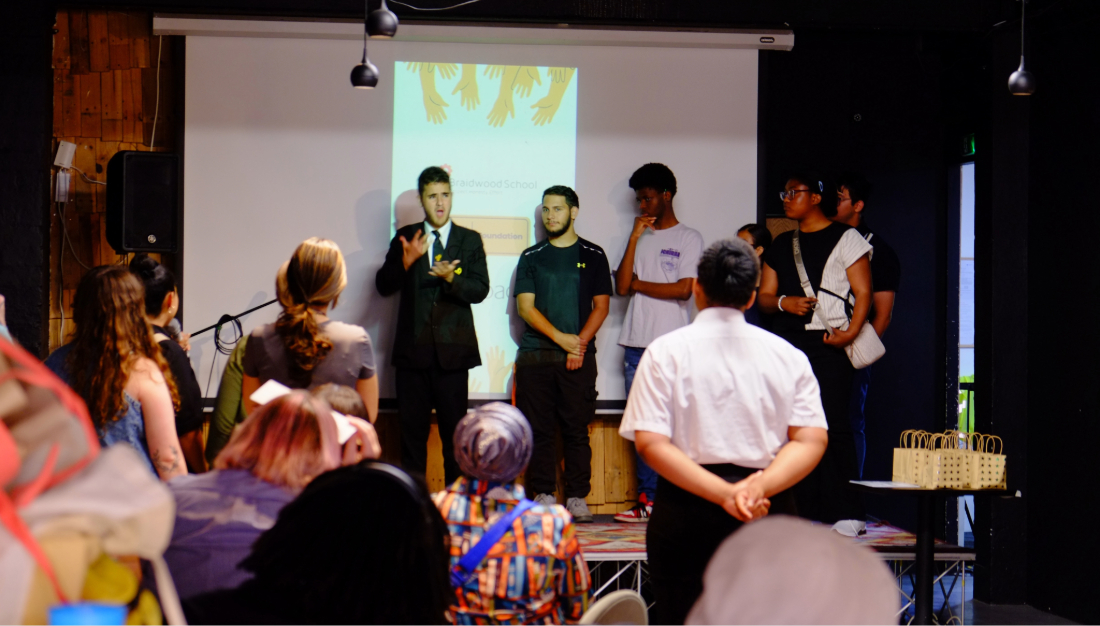
We introduced the climate change glossary to young Deaf people aged 15-19 from Braidwood Trust School for the Deaf. We used these new BSL signs to find out information and explore the issues that they most cared about.
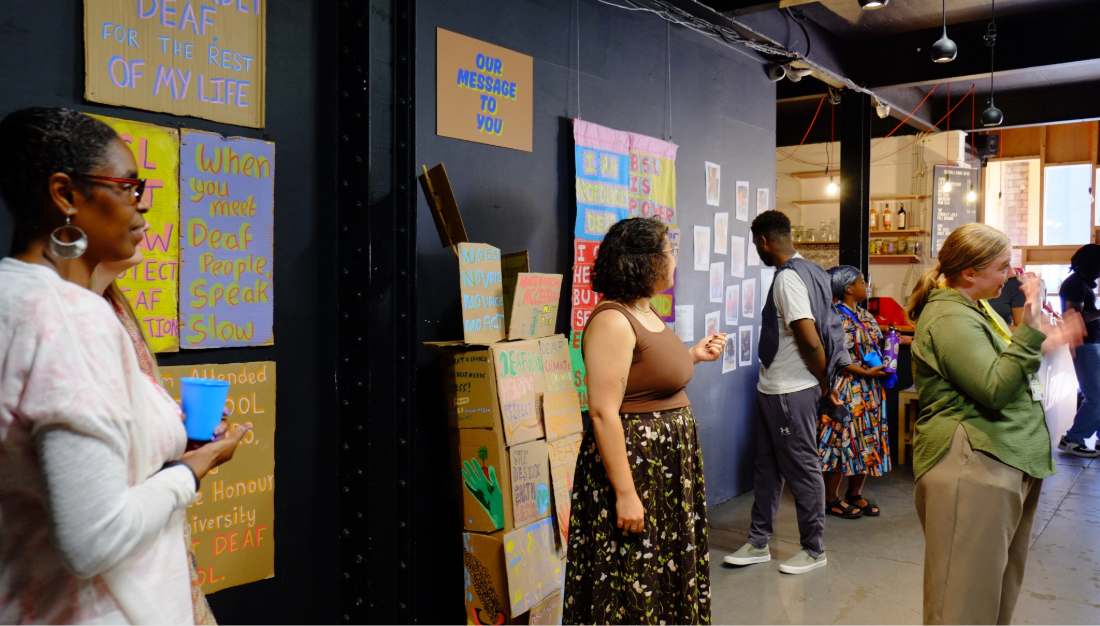
The students developed their ideas into artworks to communicate their ideas and climate action messages. They were supported by Deaf artists Maral Mamaghanizadeh, Zoe Milner, Samuel Perkins, Aishah Carberry and Emily-Rose Corby. Young Deaf creative Saneita McKenzie made films to capture the action.
Working with artists who were also Deaf and discussing the ideas in their own language (BSL) meant that the young people were more engaged and felt more motivated to speak out.
Student Campaigns
Take a look at the campaigns created by the young people…
Ahmad
Pollution
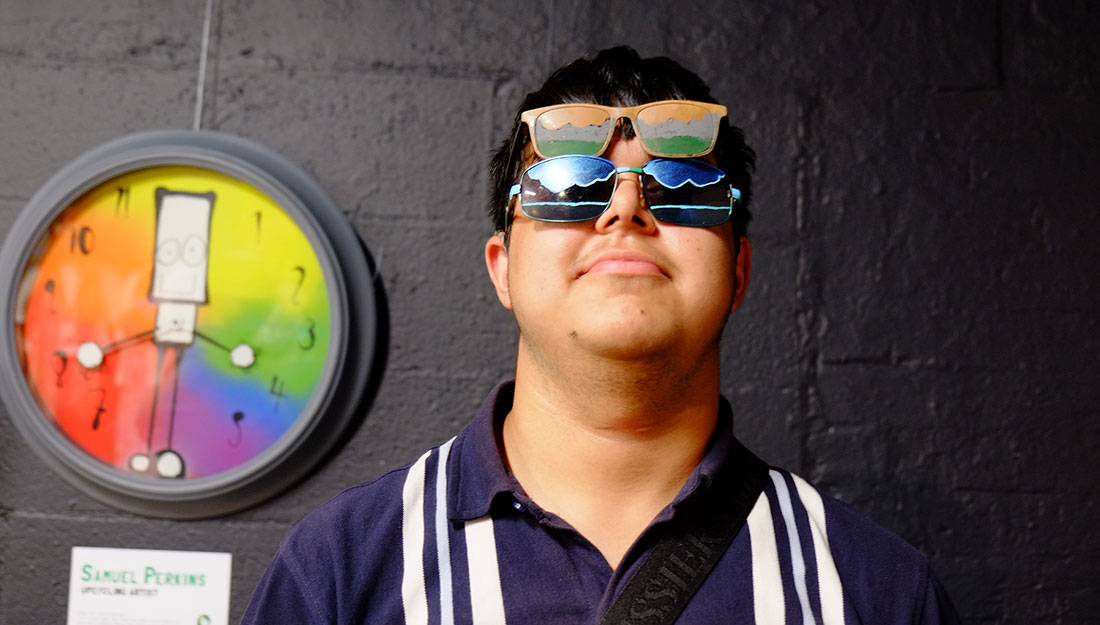
Ahmad is looking at the world through different lenses one with pollution and one without.
“I have two sets of glasses. The first glasses you can see if you look through the glasses, you can see clearly a cloud, everything is healthy, the air is fresh. If you put the other glasses on you can see all the dirt and damage from the pollution in the environment. It shows how it affects our surroundings. Hopefully you can see and this will help you to understand that we need to make a change.”
Azaria
Recycling
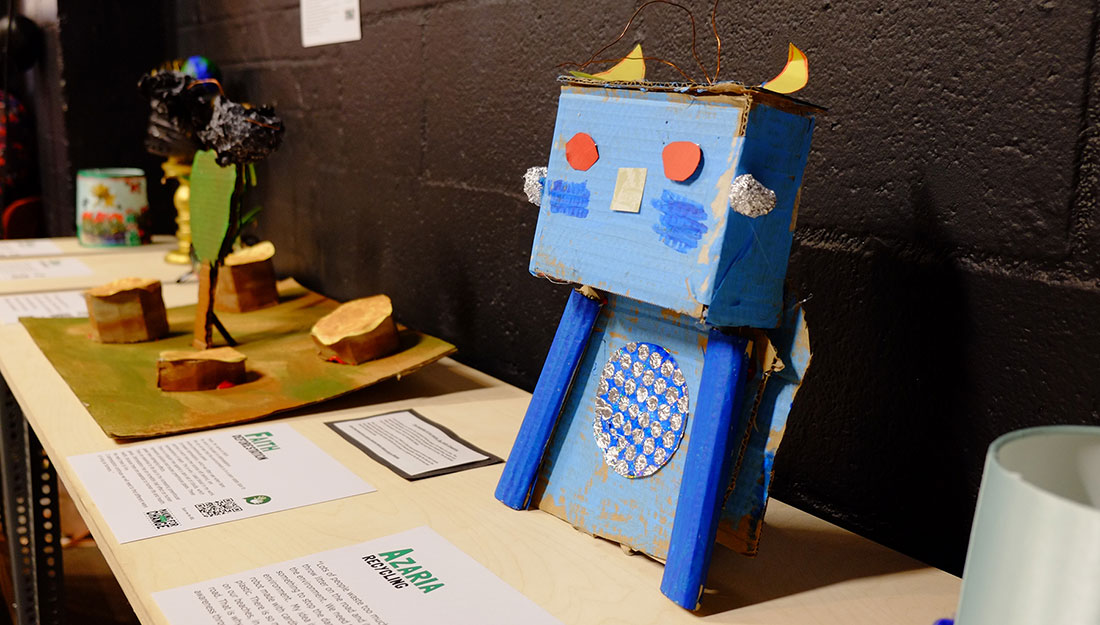
Azaria’s piece asks us to think about the importance of recycling.
“Lots of people waste too much, they throw litter on the road and it damages the environment. We need to do something to stop the damage to our environment. My idea is to create a robot made with cardboard, paper and plastic. There is so much plastic waste on our beaches, in the sea or on the road. That is why I want to raise awareness through my work.”
Fukunmi
Fossil Fuels
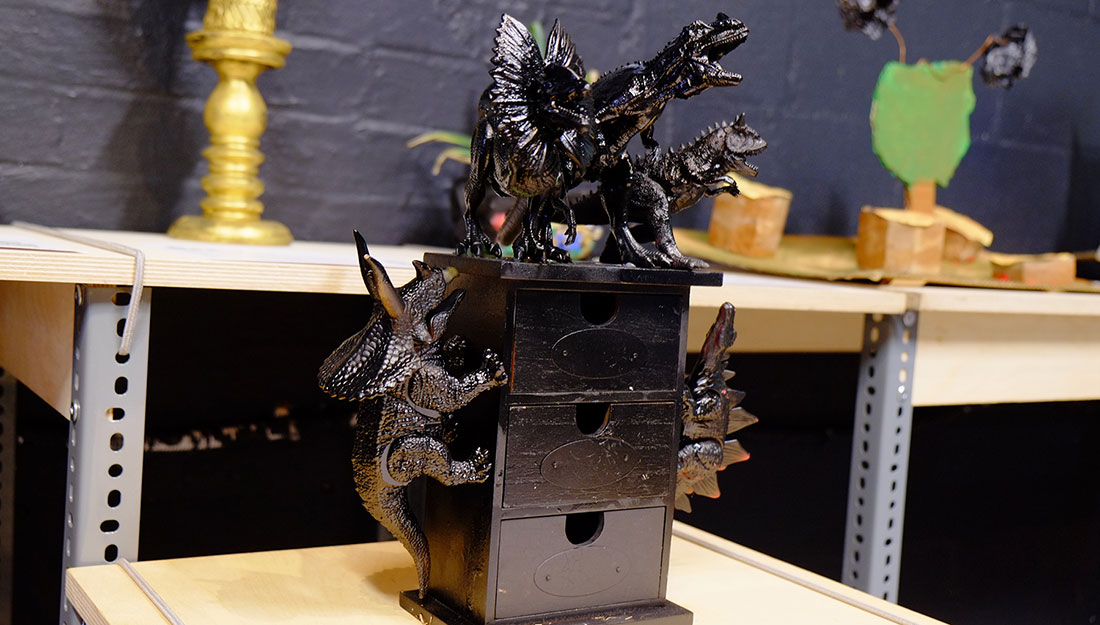
Fukunmi’s piece is about fossil fuels and how the world’s supply is running out.
“Fossil fuel means the bones from various animals that have died, built up over the years and changed to oil, which (when burnt) affects the air quality and pollutes the environment. My idea was to upcycle the old wooden drawers, and I glued old dinosaur toys and sprayed it black. This has three drawers, the bottom one is full of bones, the second drawer is only half left, and the third drawer is empty. It’s running out, showing that fossil fuel isn’t renewable; we will run out.”
Denis
Save the Earth
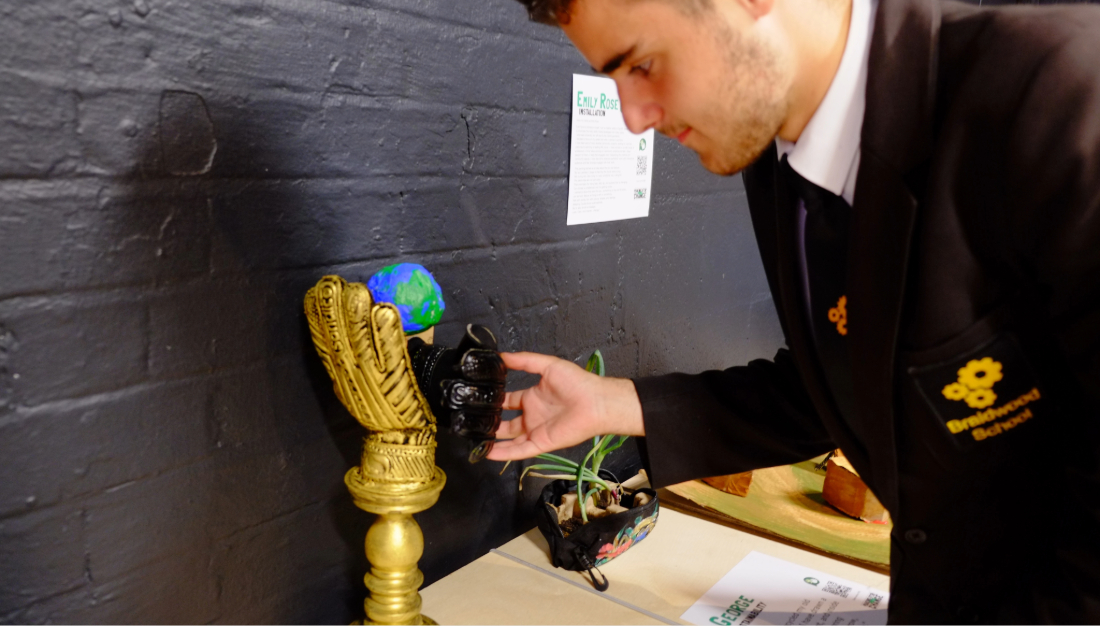
Denis’s message is about how we should hold and care for the world.
“My idea shows the environment and the affects we have on the earth. Using old goal keeper gloves, I glued them to a candle holder and sprayed one gold to show the earth is valuable and the other black to show the impact of pollution on the earth. I made the Earth with old paper scrunching it together and painting it blue and green to match the Earth. I twisted the copper wire to make it strong and I’ve put that through the Earth, through a hole so it looks like the Earth is floating in between the good environment and the pollution.”
Leo
Microplastic
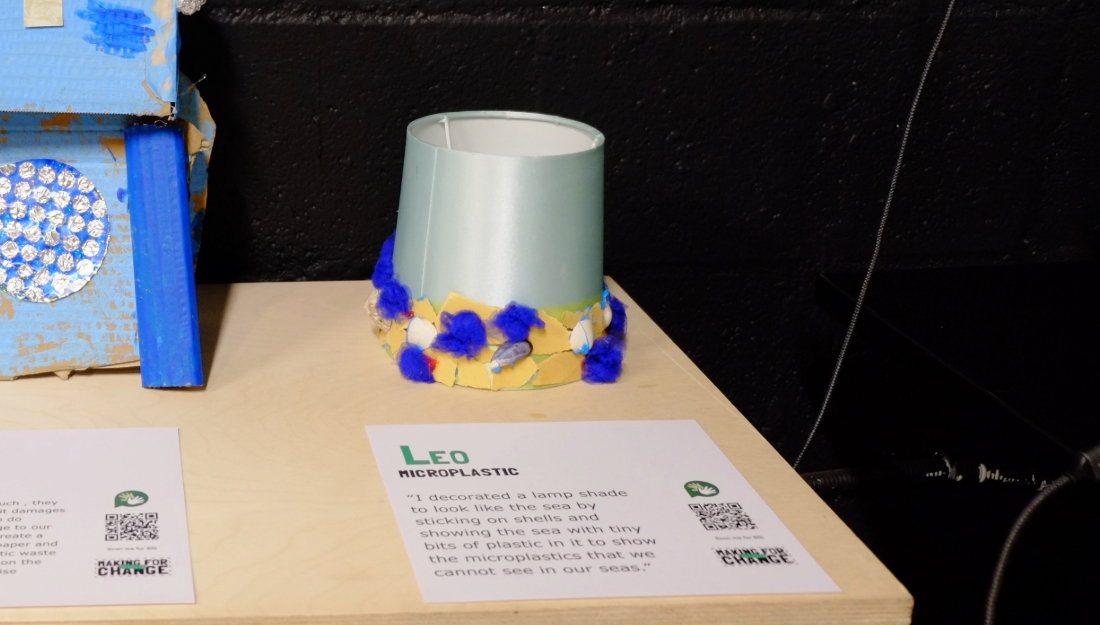
Leo is getting us to think about ocean pollution.
“I decorated a lamp shade to look like the sea by sticking on shells and showing the sea with tiny bits of plastic in it to show the microplastics the we cannot see in our seas.”
Kiana
Ecosystem
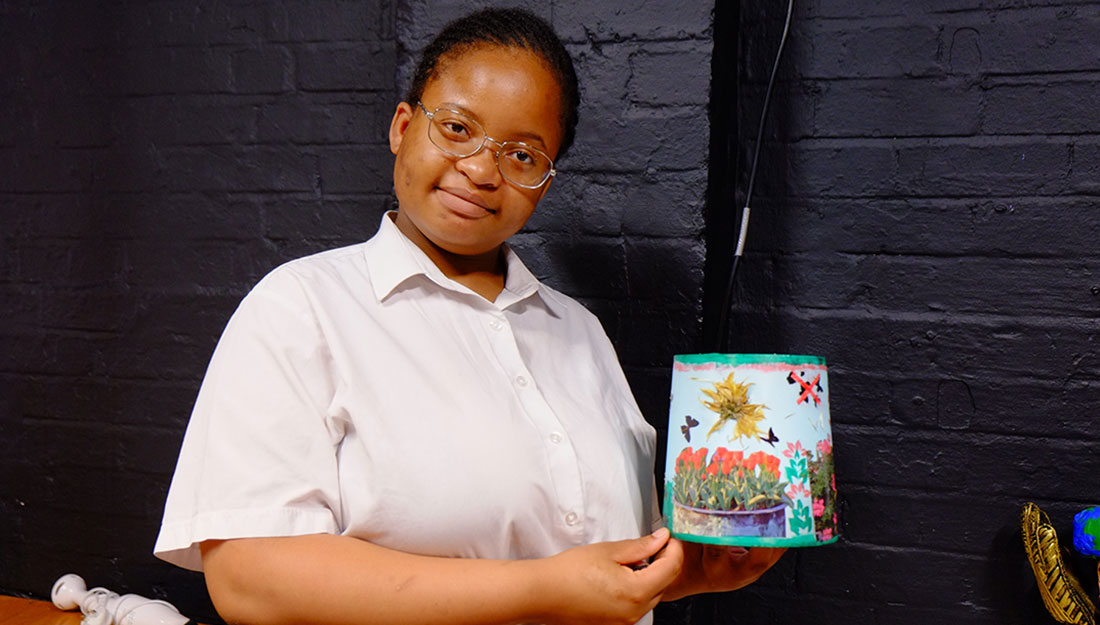
Kiana’s piece is about how everything is connected.
“The ecosystem connects everything from the flowers growing to butterflies flying around to cats. Everything is connected. I designed my lamp shade to show this by cutting out paper flowers and sticking them on around the lamp shade, along with some dead flowers showing that if we do not look after our environments the flowers and insects will decline.”
Camron
Equal Job Opportunities
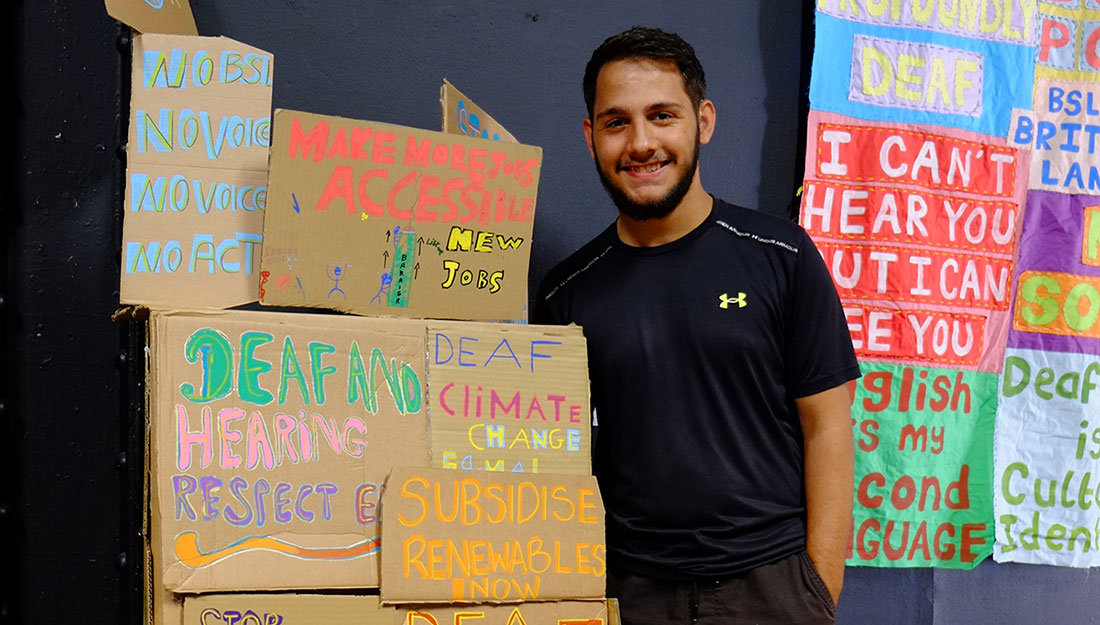
Camron used the protest banners created with artist Zoe Milner to create a sculpture.
“In this project the focus has been promoting awareness of climate change and the impact this will have on the earth. We have focused on how we can cause less damage to the earth. I personally have also considered the inequalities deaf people face in their work and that deaf people should have more accessibility and also be more active in climate change.”
Maryam
Global Warming
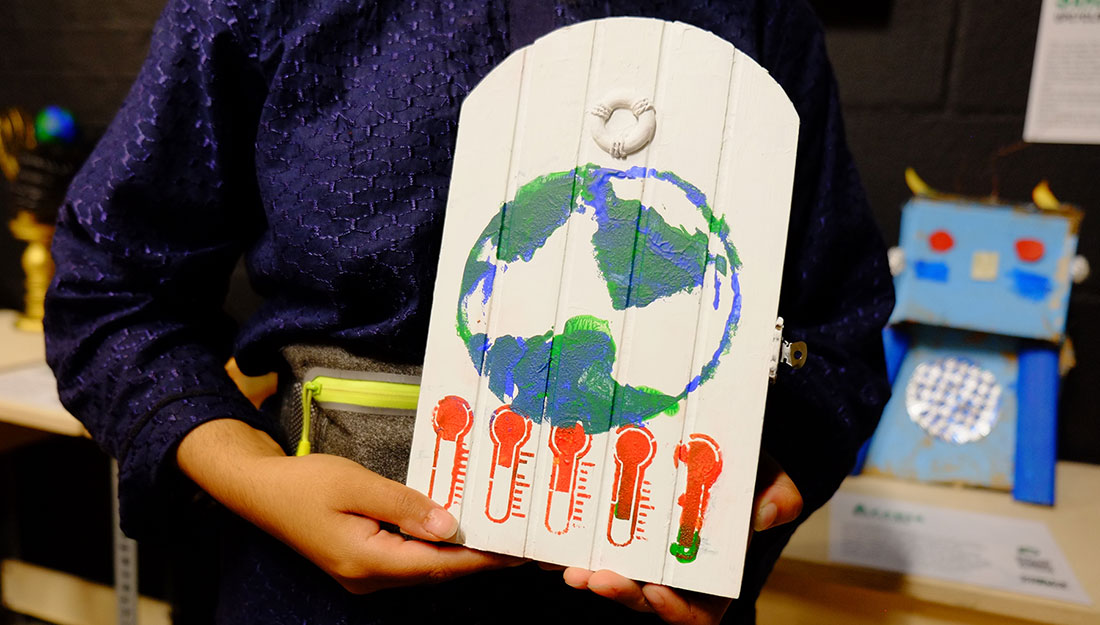
Maryam has made her piece about rising global temperatures.
“Global warming is becoming worse as temperatures are rising. I used a set of key hooks from a car boot sale to tall people about global warming and looking after the environment.”
Faith
Deforestation
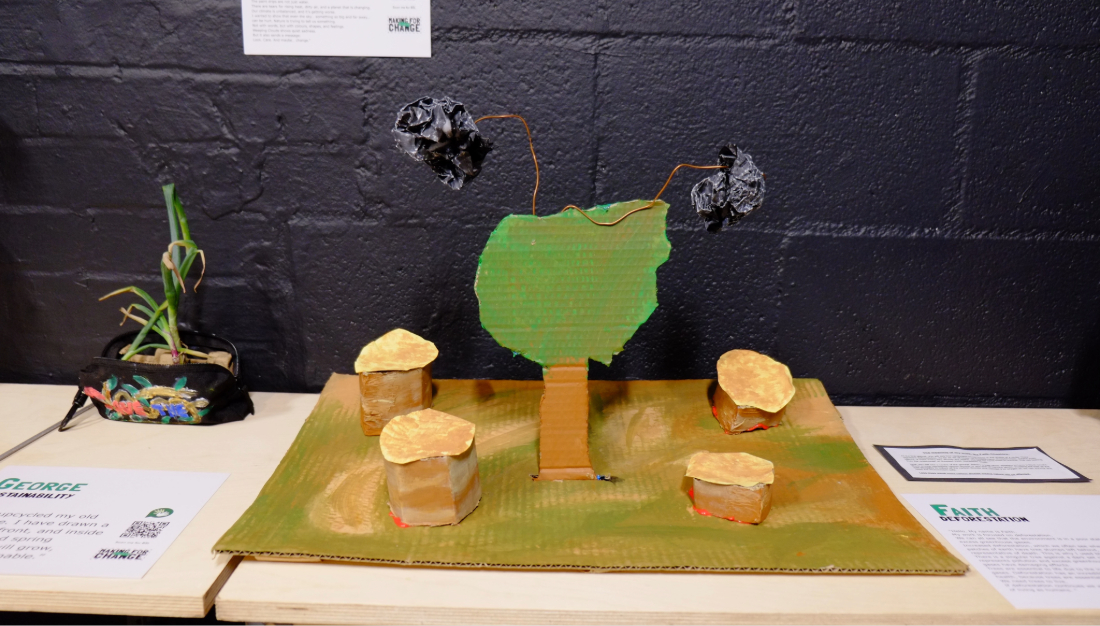
Faith was concerned about deforestation. Her piece gets us to think about the impact of cutting down trees.
“My work is focused on deforestation. We can all see that the environment is in a poor state due to excess greenhouse gases. Increased deforestation, which we often see when bare patches of earth have tree stumps left behind, are representative of death. This is why I used blood in my work. There is a singular tree against a dark set of clouds, which represents pollution and excess greenhouse gases. These gases have damaging effects. Trees are essential to life due to the increasing greenhouse gases, Deforestation has an incredibly bad effect on human health, because trees are essential to human life and health. We need trees to live. If deforestation continues we will need to find different ways of living as humans.”
George
Sustainability
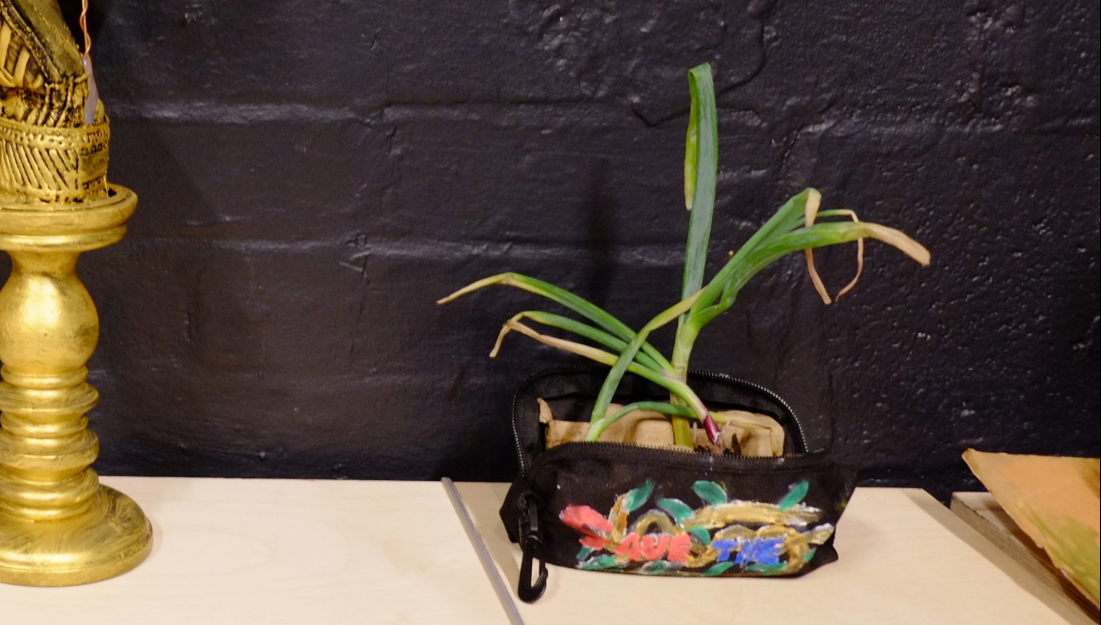
George’s piece explored the word sustainability and how we can grow the things that we need.
“I have upcycled my old pencil case. I have drawn a sun on the front, and inside I have planted spring onion which will grow, making it sustainable.”
Meet the Project Artists
Find out more about the project artists and see how the students worked with them week-by-week.
Zoe Milner
Week 1: Activism
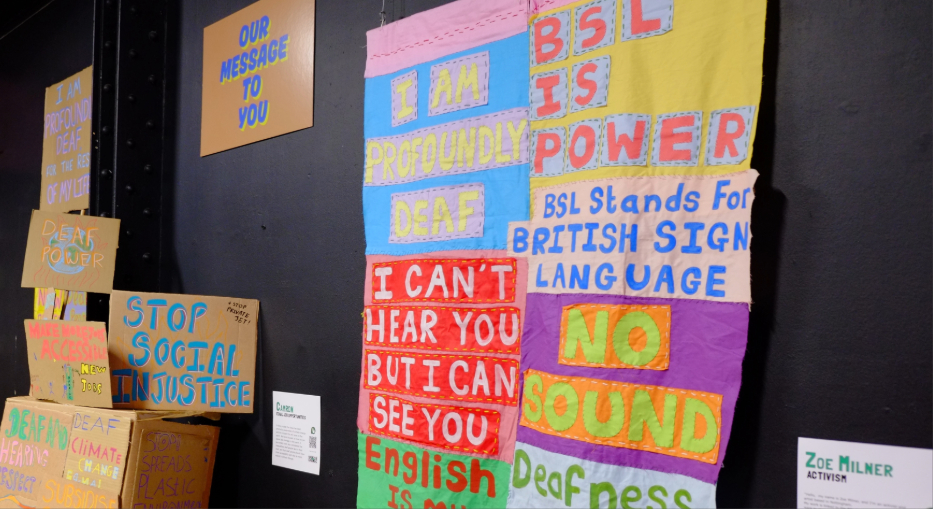
Zoe’s work is linked to the BSL Act of March 2022. She wants to show that deaf, disabled and neurodivergent communities are valuable.
“The work that is being displayed for my exhibition is made using cardboard and Posca pens, using bright colours and striking words to show how proud I am of my deaf identity.”
Aishah Carberry
Week 2: Papermaking
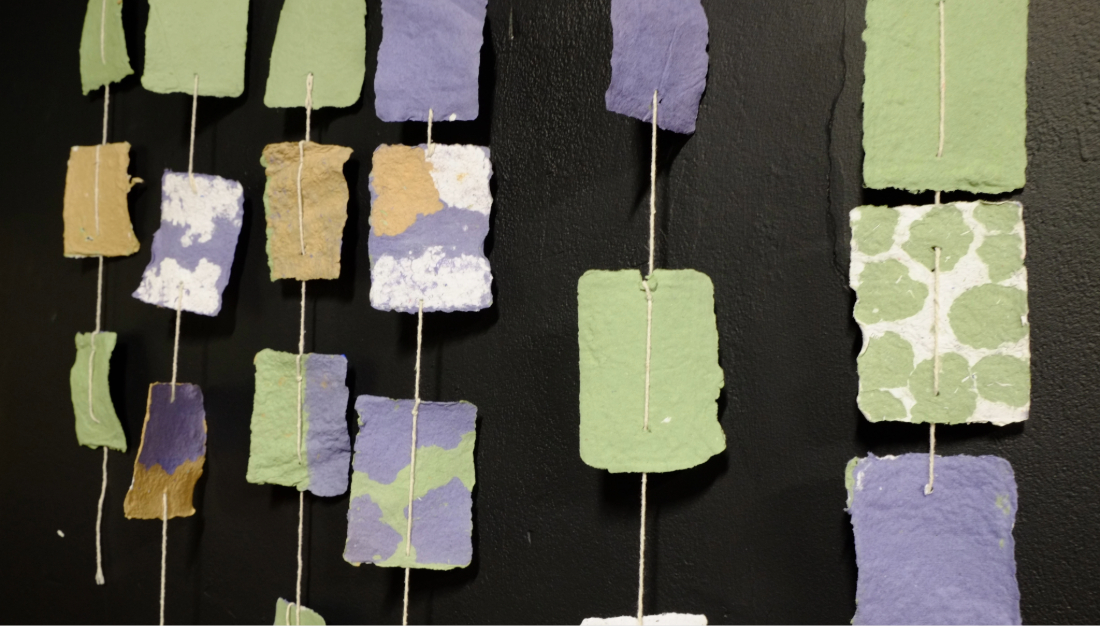
Aishah is a Deaf artist with autism, whose artistic influences are drawn from Africa and Australia.
“My work uses strong lines, with a mix of colours. I use hand-made paper, which I source from my sister. The use of colours in my work allows me to explore, choosing and working with colours that I think people are attracted to.”
Samuel Perkins
Week 3: Upcycling
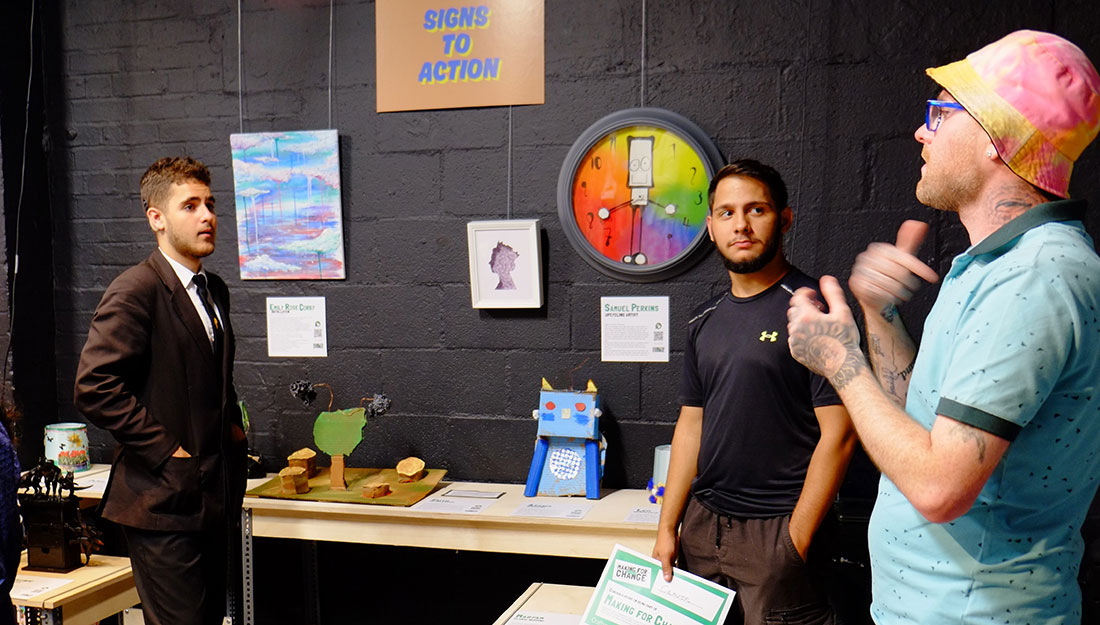
Samuel is a visual artist who incorporates upcycling into his work.
“People may collect stamps and put them in collection books, but they do not want the black franking marks on the stamps, so I use those stamps because I feel they have character. This is something I like, and as you can see here, I do mosaic work. This is something that I have been doing for a long time and is work that I really enjoy doing.”
Emily-Rose Corby
Week 4: Installation
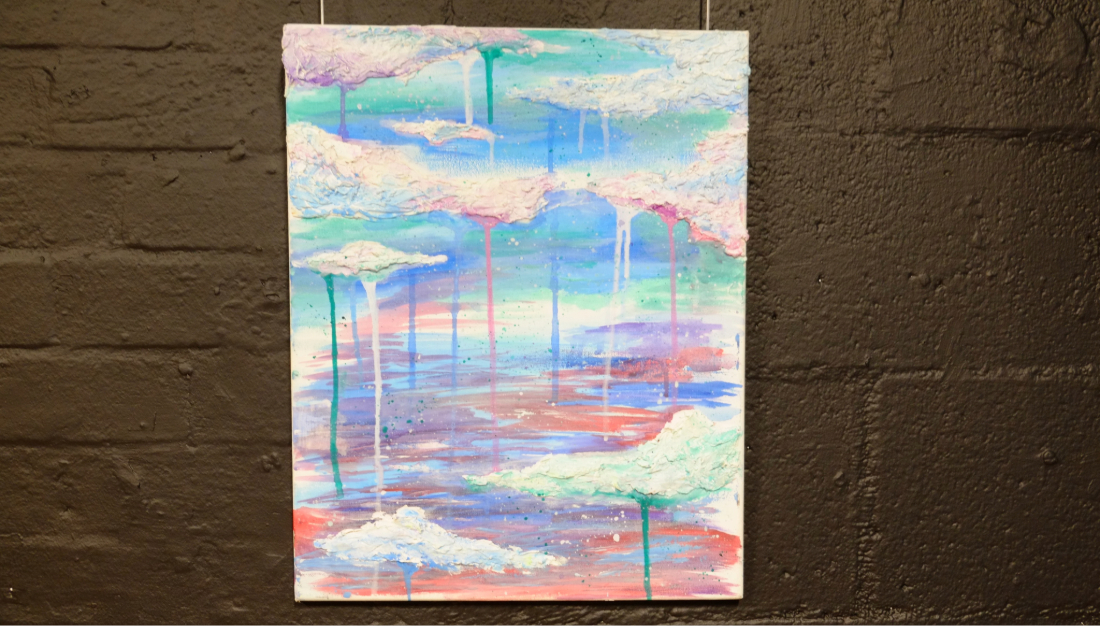
Emily Rose is a creative artist in Cardiff, Wales. She has been part of many community projects, working on carnival costumes to painting to leading BSL tours.
“I truly value working on community projects and feel a deep passion for them. I feel really engaged when integrating the creative and community spaces. I have also done extensive exhibition work with interactive audiences and feel strongly engaged with that work.
This painting started as an idea about the sky and texture. But as I painted, it began to feel like the clouds were crying. Not crying rain. But crying in a sad, emotional way. Like grief. The paint drips are not just water. There are tears for rising heat, dirty air, and a planet that is changing. Our climate is unbalanced, and it’s getting worse. I wanted to show that even the sky, something so big and far away, can be hurt. Nature is trying to tell us something. Not with words, but with colours, shapes and feelings. Weeping Clouds show quiet sadness. But is also sends a message: Look. Care. And maybe… Change.”